In This Article
Working at heights is one of the most common and serious causes of workplace accidents in sectors such as construction, maintenance, energy, and telecommunications. Therefore, the carabiner is a vital piece of equipment for ensuring worker safety. However, not every carabiner is suitable for every job. The correct choice is critical for ensuring safety and preventing accidents.
What is a Carabiner?
A carabiner is a metal connector used to link ropes, safety harnesses, or other personal protective equipment. It is used in working at heights to minimize the risk of falling and ensure a safe working environment. Carabiners are usually made of aluminum or steel and have high load-bearing capacity.
The Importance of Choosing the Right Carabiner for Working at Heights
Using the wrong or low-quality carabiner when working at heights can cause serious injuries or death. Choosing the right carabiner:
- Reduces the risk of falling
- Increases worker safety
- Ensures compliance with regulations
- Reduces long-term costs
- Selection Criteria for the Right Carabiner
1. Material Quality
- Steel carabiners: Provide high durability and long lifespan. Suitable for industrial and professional use.
- Aluminum carabiners: Lightweight and portable. Mostly used for sports and light-duty work.
2. Locking Mechanism
- Automatic locking carabiners: Lock automatically, minimizing the risk of falling.
- Screw-lock carabiners: Lock manually; neglect can create risk.
3. Strength and Load Capacity
- The load capacity is indicated on the carabiner in kN (kiloNewtons).
- Minimum 20 kN: Recommended for working at heights and heavy load applications.
- Lower kN rated carabiners: Suitable for light work or sports use.
4. Shape and Design
- D-shaped carabiners: Direct the load to the spine, the safest and most common type.
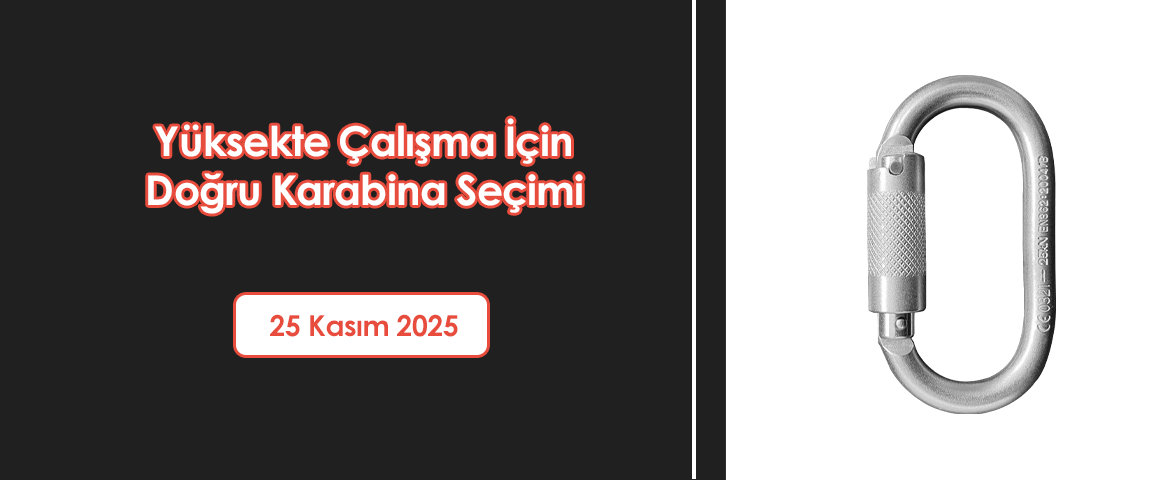
- Oval carabiners: Balance load distribution, compatible with various equipment.
- Asymmetric carabiners: Used for technical and professional applications.
5. Certification and Standards
Carabiners with EN, CE, or UIAA certifications should be preferred. Uncertified products increase safety risks.
6. Suitability for the Work Area
- Industrial and construction work: Steel, high kN, automatic locking carabiner.
- Maintenance and light work: Aluminum, screw-lock, or lightweight locking carabiner.
Additional Safety Recommendations
- Carabiners should be regularly checked for wear, cracks, and deformation.
- Replace according to the manufacturer's instructions and usage period.
- Must be compatible with other personal protective equipment (harness, lanyard, shock absorber).
Choosing the right carabiner for working at heights should consider material, locking mechanism, strength, certification, and work area. Low-quality or unsuitable carabiners jeopardize worker safety and increase the risk of workplace accidents. A safe choice prevents accidents, ensures compliance, and improves productivity.
Let our team recommend the best equipment for your needs and quote you quickly.