In This Article
In working at heights, mountaineering, industrial tasks, or rescue operations, the carabiner is a critical piece of equipment that directly impacts the safety of workers and users. Choosing the wrong carabiner can lead to serious accidents. Therefore, a safe and proper carabiner selection is vital for both professionals and amateur users.
What is a Carabiner?
A carabiner is a metal connector used to link safety ropes, harnesses, or other ropes. It is usually made of aluminum or steel and has high durability and the ability to absorb fall forces. Carabiners are used to ensure safety in working at heights, mountaineering, and various sports or industrial applications.
Criteria for the Safest Carabiner Selection
1. Material Quality
- Steel carabiners: Provide high strength and long lifespan, ideal for heavy industrial work and rescue operations.
- Aluminum carabiners: Lightweight and portable, suitable for mountaineering and sports use.
The carabiner material should be chosen according to the intended use; safety should never be compromised.
2. Locking Mechanism
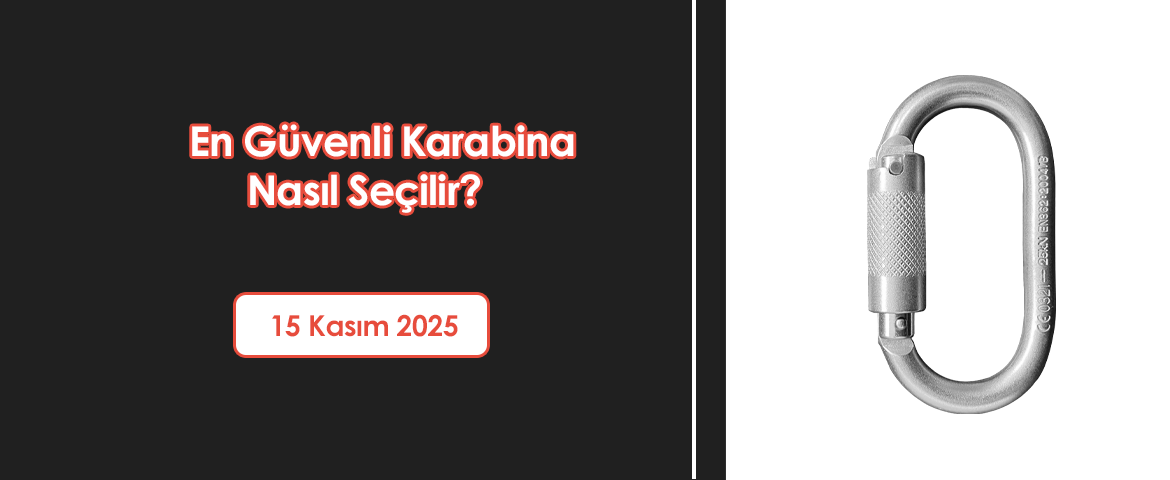
- Automatic locking carabiners: Close automatically and are the safest option for preventing accidents.
- Screw-lock carabiners: Lock manually; safe when used correctly, but can be risky if neglected.
- Quick-lock or simple carabiners: Suitable for sports or temporary attachments; not recommended for heavy loads.
3. Strength and Load Capacity
The maximum load capacity of the carabiner is indicated in kN (kiloNewtons).
- Fall or load-bearing: Minimum 20 kN strength is recommended.
- Light applications: Lower kN carabiners can be used, but safety limits must be respected.
4. Shape and Design
- D-shaped carabiners: Direct the load to the spine, safe and the most commonly used type.
- Oval carabiners: Suitable for various equipment, provide balanced load distribution.
- H-molded or asymmetrical carabiners: Used especially in technical climbing and industrial applications.
5. Standards and Certifications
Carabiners with EN, UIAA, or CE certifications guarantee safety. Uncertified products may appear cheap but pose serious risks.
6. Suitability for Usage
The intended use must be clearly determined when selecting a carabiner:
- Working at heights and industry: Steel, automatic locking, high kN carabiner.
- Mountaineering and sports: Aluminum, lightweight, locking or screw-lock mechanism.
- Rescue operations: Professional models with maximum durability and safety features.
Additional Safety Recommendations
- Carabiners should be regularly checked for wear, cracks, and deformation.
- Follow manufacturer instructions for reuse and replace after a certain period.
- The carabiner should be compatible with other personal protective equipment (harness, lanyard, shock absorber, etc.).
The safest carabiner selection is possible by correctly analyzing material quality, locking mechanism, strength, certification, and intended use. Focusing on quality rather than cost in safety equipment prevents accidents and saves lives while improving productivity in the long term.
Let our team recommend the best equipment for your needs and quote you quickly.