
In This Article
The differences between horizontal and vertical lifelines are a critical issue in terms of occupational safety. These systems, used to ensure the safety of personnel working at heights, are designed for different needs. Both types of lifelines minimize the risk of falling, but their usage and installation areas differ.
Horizontal lifelines are generally preferred on wide surfaces. They help workers move safely, especially on bridges, roofs, or long platforms. While moving along the lifeline with a hooked system, the worker is protected against falling hazards. These systems can allow simultaneous use by more than one person. In addition, the strength of the anchor points and the correct calculation of distances are of great importance during installation.
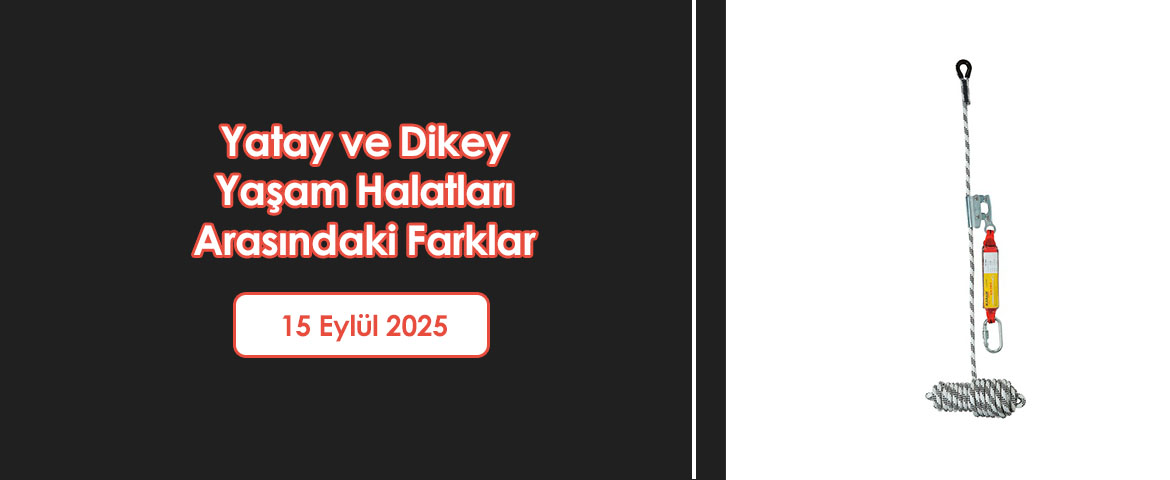
Vertical lifelines, on the other hand, are preferred on ladders, towers, and similar vertical structures. The worker is connected to the lifeline while climbing up or descending. Thanks to sliding fall arresters, the person is protected against possible slips. These systems are more suitable for individual use and are usually integrated into fixed structures. During installation, the height, rope tension, and reliability of the connection equipment must be carefully checked.
Basic Functions of Lifelines
The first function is to create a barrier that prevents falling. Even if the worker slips, the fall is stopped in a short distance, preventing serious injuries.
The second function is to enable safe movement. Workers can perform their tasks more easily thanks to the lifeline, supporting productivity without compromising safety.
The third function is to provide psychological security. Workers feel safer when connected to a lifeline, which helps them focus entirely on their work.
The fourth function is to maintain order in the working area. Lifeline systems create a specific route and make it easier for workers to stay within safe zones.
The fifth function is to meet legal requirements. Lifelines help ensure compliance with occupational safety regulations.
When combined, all these functions make lifelines an indispensable safety equipment in high-risk areas, supporting both individual and collective protection.
Vertical Lifelines: Definition and Usage Areas
Vertical lifelines are systems that ensure the safety of workers while ascending or descending at height. They are especially used in vertical structures, towers, ladders, or narrow spaces, offering effective protection against falling risks. The worker is connected to the lifeline with a movable fall arrester, preventing falls in case of slips. The safety provided by these systems is of great importance in construction, energy, telecommunications, and maintenance sectors. Here are the features of vertical lifelines:
- Provides safe ascent.
- Reduces the risk of falling.
- Supports worker movement.
- Adapts to fixed structures.
- Suitable for single-user use.
Provides safe ascent: Vertical ropes help workers climb up safely, especially in ladder or tower climbing.
Reduces fall risk: Fall arrest systems activate immediately in case of slips, preventing serious injuries.
Supports worker movement: Vertical systems allow natural movements during climbing or descending.
Adapts to fixed structures: Usually installed on towers, chimneys, or fixed ladders, forming a continuous safety line.
Suitable for single-user use: These systems are typically designed for individual protection, ensuring focused safety.
Horizontal Lifelines: Definition and Usage Areas
Horizontal lifelines are one of the protection systems developed to ensure the safety of workers at heights. These lifelines are installed horizontally along the working area, allowing workers to move with their connection equipment while being constantly secured against falling risks. They are critical in roof, scaffold, bridge, or large structure maintenance work.
The most important feature of horizontal lifelines is increasing the mobility of workers. Safe movement across large areas boosts work speed and efficiency. They are usually made of steel or high-strength synthetic materials, ensuring durability and safety in long-term use. During installation, anchor points must be correctly determined, rope tension adjusted, and compliance with standards checked.
Design Differences Between Vertical and Horizontal Lifelines
Horizontal lifelines provide safety on horizontal planes. They are ideal for workers on roofs, wide platforms, or long bridges. Workers can easily move sideways along the lifeline. This difference changes many details, from anchor arrangements to rope tension.
In vertical systems, most of the load is transferred downward, making rope strength and locking mechanism sensitivity critical. In horizontal systems, since side movement is intense, rope flexibility and anchor strength become more important. This design difference also determines their usage areas.
Differences in Installation and Mounting
Horizontal and vertical lifelines are among the most critical safety equipment. However, their installation processes differ. Horizontal systems are generally preferred over wide areas and long distances. They are stretched between anchor points with steel ropes or durable materials. Strong anchorage is essential; otherwise, the system will not function safely.
In vertical systems, the fixing point is usually at the top, applied on a tower, pole, or tall structure. The rope extends downward, and the user moves along it with a special sliding mechanism. This setup is practical for vertical access areas. Rope tension and slider compatibility must be carefully checked during installation.
Differences in Ease of Use and Practicality
Vertical systems are developed mainly for upward or downward movement on fixed lines. The user attaches the slider to the rope, which moves automatically and locks instantly in an emergency. This ensures both safety and speed, providing secure climbing or descent.
From a practicality perspective, horizontal systems are suitable for team work in large construction sites or long bridges, allowing multiple workers to move safely along the same line. Vertical systems, however, are generally intended for individual use, such as ladder climbing, tower access, or vertical maintenance.
Let our team recommend the best equipment for your needs and quote you quickly.