
In This Article
One of the most essential needs of employees in the field of occupational safety is personal protective equipment (PPE) used to prevent the risk of falling from heights. Among these, the carabiner — small but crucial — plays an important role in connection and anchoring tasks, making it an indispensable part of a safe working environment.
What is a Carabiner?
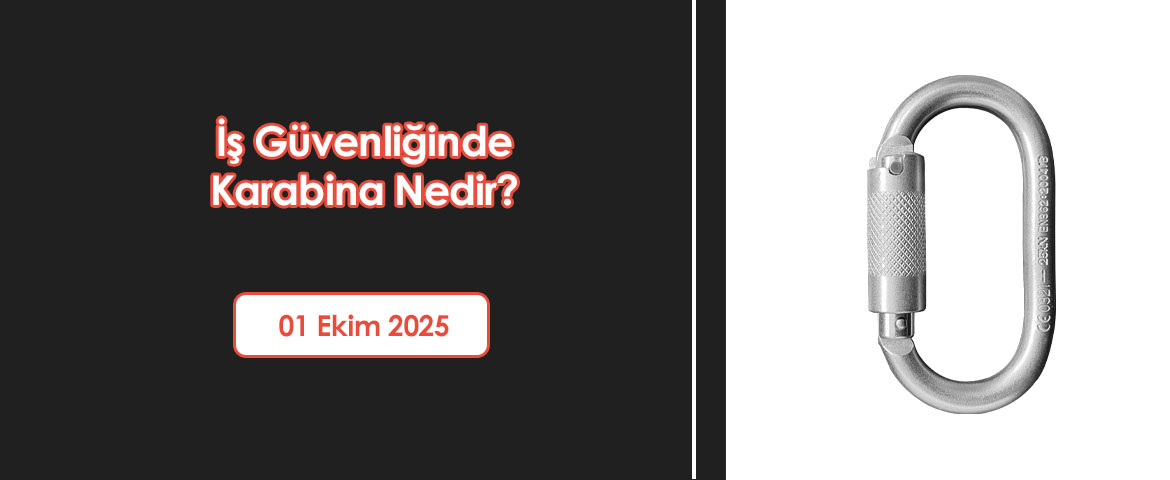
A carabiner is a metal connector with a spring-loaded gate that connects two pieces of equipment. Simply put, it is used to safely connect ropes, hooks, safety harnesses, or anchor points.
Thanks to its durable structure, carabiners can withstand high loads and sudden pulling forces. For this reason, they are widely used in both mountaineering and industrial safety applications.
Usage Areas of Carabiners in Occupational Safety
Carabiners are used in many industries for different purposes. Especially in work-at-height environments, they are the most critical connecting element of fall arrest systems.
Main usage areas include:
- Work-at-height systems (roof, scaffold, platform tasks)
- Rope access applications
- Rescue and evacuation operations
- Power pole or energy line maintenance
- Construction and industrial maintenance tasks
Types of Carabiners
Carabiners are produced in different shapes and mechanisms depending on their field of use. The most common types in occupational safety are:
- Screw Lock Carabiner: Prevents accidental opening with a threaded locking system. Ideal for long-term connections.
- Auto Lock Carabiner: Automatically locks with a spring mechanism. Preferred for quick and frequent connections.
- Oval Carabiner: Distributes load evenly due to its symmetrical shape, often used in rope systems.
- D-Shaped Carabiner: One of the strongest designs; most of the load is transferred to the durable spine of the carabiner.
Safety Tips When Using a Carabiner
Although small, improper use of a carabiner can cause serious accidents. Important points to consider include:
- The carabiner must be certified (compliant with EN 362, CE standards, etc.).
- Check for cracks, deformation, or rust before each use.
- Ensure the locking mechanism is fully closed.
- Use the carabiner in a vertical position, not horizontally.
- Avoid using different metal types (e.g., steel + aluminum) in the same system.
Let our team recommend the best equipment for your needs and quote you quickly.