In This Article
Working at heights carries vital risks — the right equipment saves lives. The carabiner (connector) is one of the most critical parts of your safety system. In this article, I clearly, practically, and understandably explain which type of carabiner should be preferred in occupational safety, what to pay attention to, and the rules of maintenance/inspection for daily use.
1. What is a Carabiner? Short and Simple
A carabiner is a metal connector used to attach ropes, lanyards, safety harnesses, or other connecting elements together. In fall protection systems, they are also known as “connectors,” and if the wrong type or certification is chosen, it can become the weak link of the system.
2. Types of Carabiners Used in Occupational Safety
Locking carabiners
- Screwgate: Simple and reliable, but vibration or dirt can loosen it — frequent checks are necessary.
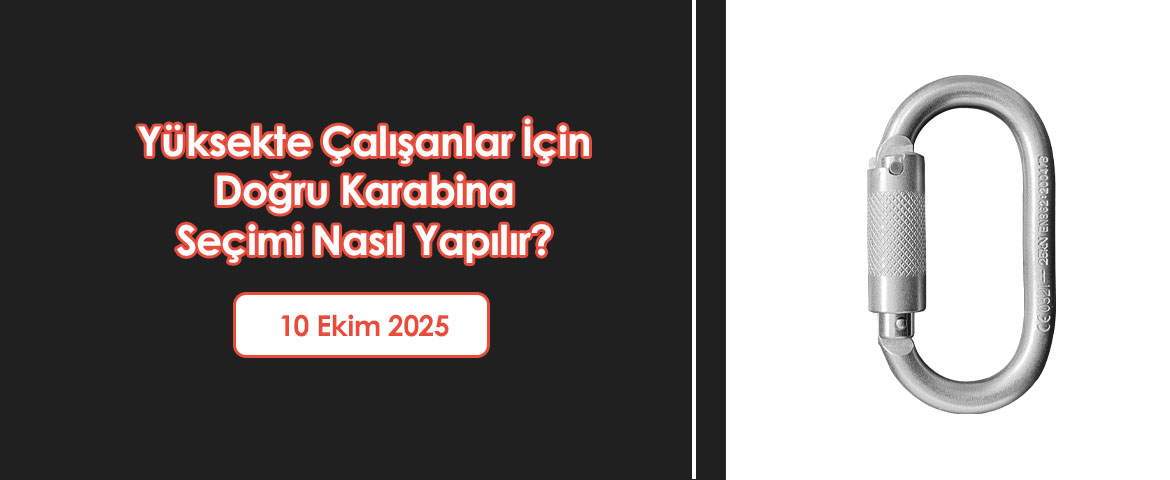
- Auto-lock / triple action: The gate locks automatically; safer for industrial applications.
- Twist-lock / bayonet: Allows quick use with automatic locking.
Non-locking carabiners
Usually used in climbing or non-industrial applications; for work at height, locking types should be preferred.
Shape-based classification
- D-shape: Strong and carries the load directly along the spine.
- Oval: Versatile but has lower load capacity.
- HMS / pear shape: Advantageous for rope maneuvers, works well with belay devices.
Material
- Aluminum: Lightweight, suitable for carrying.
- Steel: Preferred in abrasive, chemical, or impact-heavy environments (heavier).
3. Safety and Technical Considerations
Load capacity (kN value)
Carabiners are marked with kN (kiloNewton) values for open/closed gate and axial/non-axial load conditions. Ensure the minimum required kN value is met for your intended use.
Certification and standard markings
For industrial use, compliance with relevant standards (CE mark and quality/standard codes) is essential. The product should display manufacturer, serial number, and standard information.
Gate type and opening width
The gate must not open easily but should lock securely. Its opening width must be compatible with the attached equipment.
Wear, deformation, and weld quality
Should be a single-piece forging or properly welded; threads must be smooth and well-machined.
4. Which Carabiner is Suitable for Which Job?
- Personal fall arrest harness connection: Auto-locking, high kN-rated, preferably steel or reinforced aluminum carabiner.
- Temporary attachment / tool tether: Non-locking or small locking, lightweight aluminum can be used — but special tether systems are recommended to prevent tool drops.
- Rope access / industrial descent: Ensure compatibility with harness and devices; HMS/pear types are suitable with braking devices.
- Rescue operations: High-strength, steel, or heavy-duty locking carabiners resistant to wear and impact.
Guide for workers at height: Increase safety with carabiner types, technical features, safety standards, and maintenance tips.
Let our team recommend the best equipment for your needs and quote you quickly.