

In This Article
A significant portion of workplace accidents occurs in high-risk environments such as working at height and controlled areas. Personal protective equipment (PPE) plays a vital role in reducing these risks. Among this equipment, the lanyard is an indispensable component of fall arrest systems and personnel safety. Proper lanyard use can be life-saving in the event of an accident.
What Is a Lanyard?
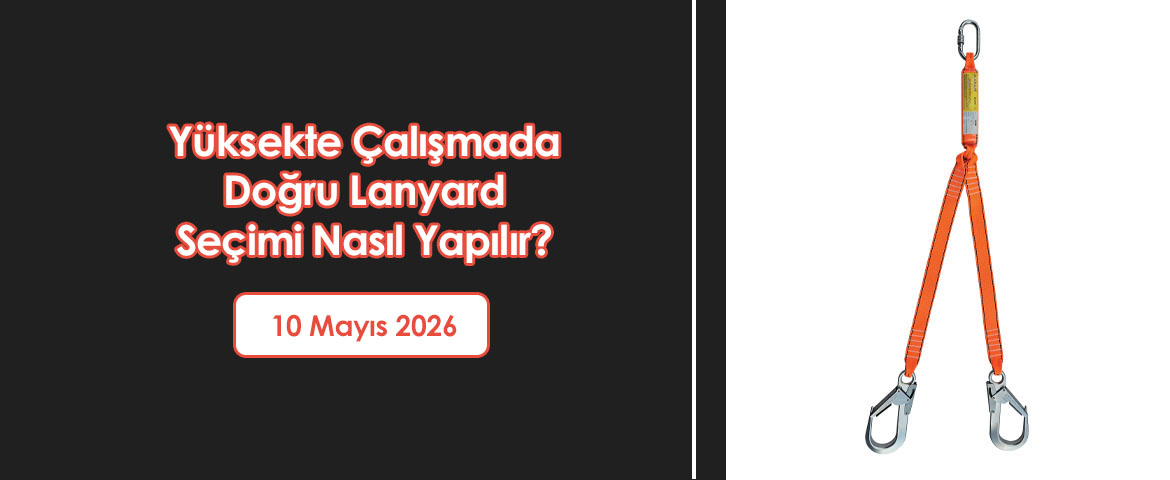
A lanyard is a safety device that connects a full-body safety harness to an anchor point or lifeline, limiting or arresting a fall. Lanyards used in occupational safety are typically designed with energy absorbers, locking carabiners, and in compliance with relevant standards.
Note: Lanyards used in occupational safety are completely different from promotional badge lanyards.
Why Is the Lanyard Important in Occupational Safety?
The use of a lanyard directly protects workers against fall hazards. Its main benefits include:
- Preventing falls from height or reducing their impact
- Absorbing impact forces during a fall
- Keeping the worker securely connected to the anchor point
- Preventing workplace accidents from becoming fatal
Lanyard use is especially critical in jobs that require working at height.
Where Are Lanyards Used?
Lanyards used for occupational safety are commonly applied in the following areas:
- Construction sites
- Roofing, scaffolding, and platform work
- Energy and telecommunications sectors
- Industrial facilities and factories
- Maintenance, repair, and installation work
In these fields, lanyard use is mandatory under safety regulations.
Types of Lanyards and Their Contribution to Safety
Different types of lanyards are available depending on the need:
- Energy-absorbing lanyard: Reduces fall forces
- Double-leg lanyard: Ensures continuous attachment
- Adjustable lanyard: Adapts to different working distances
- Steel wire lanyard: Resistant to cutting and abrasion
Choosing the right lanyard forms the foundation of safety.
Standards and Regulations
Lanyards used in occupational safety must comply with specific standards:
- EN 355: Standard for energy-absorbing lanyards
- EN 354: General lanyard standard
- CE Certification: Compliance with European Union occupational safety requirements
The use of non-compliant products poses serious risks.
Common Mistakes in Lanyard Use
Commonly encountered mistakes on worksites include:
- Connecting to an incorrect anchor point
- Continuing to use damaged or worn lanyards
- Failing to close the carabiner lock
- Using a lanyard of incorrect length
These mistakes are among the leading causes of accidents.
Periodic Inspection and Training
Lanyards must be inspected regularly, and workers should be trained in their proper use. In particular, the following should be checked before use:
- Stitching and energy absorber section
- Carabiners and connection points
- Condition of the rope or webbing
Lanyards should not be used without these checks.
Lanyard use in occupational safety plays a critical role in reducing the risks associated with working at height. Through proper selection, standards-compliant use, and regular inspections, a large proportion of workplace accidents can be prevented. Occupational safety proves that even a small piece of equipment can make a big difference.
Let our team recommend the best equipment for your needs and quote you quickly.