In This Article
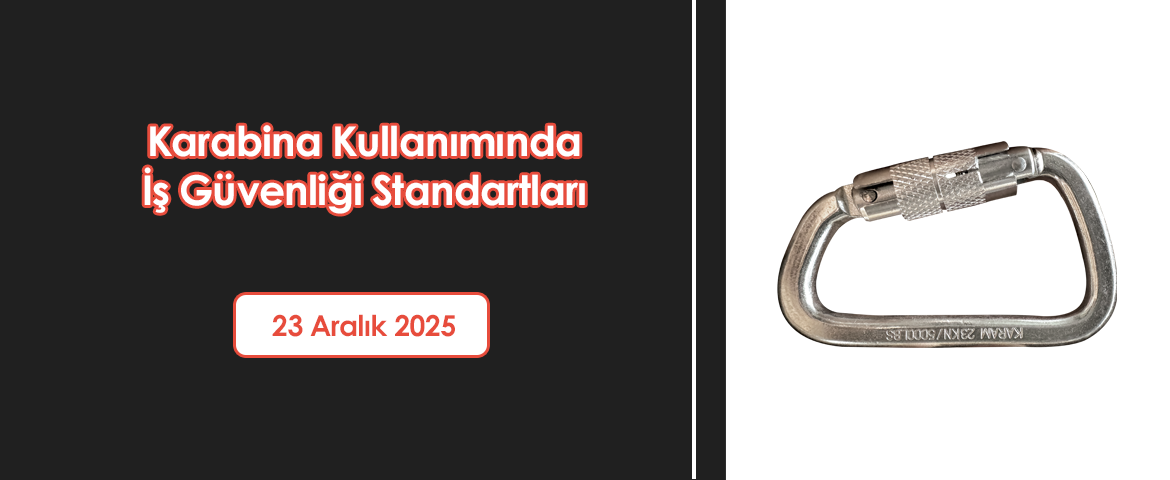
The carabiner, used in many high-risk activities—especially working at height—is one of the most critical connecting components of fall arrest and anchoring systems. For this reason, it is vital that carabiners comply with occupational safety standards and are used correctly. Non-compliant or improperly used carabiners can lead to serious workplace accidents.
Why Must Carabiners Comply with Standards?
Carabiners are a fundamental part of systems designed to protect workers or equipment from falling from height. Compliance with standards ensures:
- Load capacity remains within safe limits
- Proper functioning of the locking mechanism
- Resistance to impact and sudden loads
- Long-term, safe, and reliable use
under all conditions.
Key Standards Applicable to Carabiner Use
Carabiners used in occupational safety must comply with national and international standards:
- EN 362: Standard for connectors used in personal protective equipment
- CE Certification: Indicates compliance with European Union occupational safety requirements
- EN 12275: A standard for mountaineering carabiners and not recommended for industrial use
In construction and industrial applications, products certified to EN 362 and CE must be used.
Load Capacity and kN Rating
The kN (kilonewton) value marked on a carabiner indicates the maximum load the product can withstand. For carabiners used in occupational safety, the following are important:
- High kN rating
- Maximum strength when closed and locked
- Resistance to side loading
Carabiners loaded in the wrong direction may pose a risk even if they meet the standards.
Locking Mechanism Standards
Carabiners used in occupational safety should generally be locking:
- Automatic locking carabiners: Reduce the margin for human error
- Screw-lock carabiners: Provide manual control
Checking the locking mechanism before each use is part of standard safety procedures.
Usage Instructions and Training
Using a standards-compliant product alone is not sufficient. Workers must be trained to:
- Select correct carabiner connection points
- Properly connect to anchor points
- Avoid incorrect combinations
Proper training and informed use are integral parts of occupational safety standards.
Periodic Inspection and Maintenance Standards
Carabiners must be inspected at regular intervals. According to standards:
- The locking mechanism must function correctly
- The body must be free from cracks, deformation, or corrosion
- Carabiners that have been subjected to impact must not be used
Damaged products must be removed from service immediately.
Employer and Employee Responsibilities
Under occupational safety regulations:
- Employers are responsible for providing standards-compliant equipment
- Employees are responsible for using equipment correctly and according to instructions
Failure to fulfill these responsibilities may result in serious legal and life-threatening consequences.
Occupational safety standards for carabiner use aim to protect the lives of workers engaged in work at height and other high-risk activities. Through correct selection, regular inspections, and conscious use, a large proportion of workplace accidents can be prevented. It should be remembered that a seemingly small detail in occupational safety can lead to major consequences.
Let our team recommend the best equipment for your needs and quote you quickly.