

In This Article
The construction industry is one of the fields with the highest risk of falls from height. For this reason, personal protective equipment used to ensure worker safety is of vital importance. One of the most important pieces of this equipment is the construction-type safety harness. Choosing the right safety harness is just as critical as using it correctly in preventing potential accidents.
What Is a Construction-Type Safety Harness?
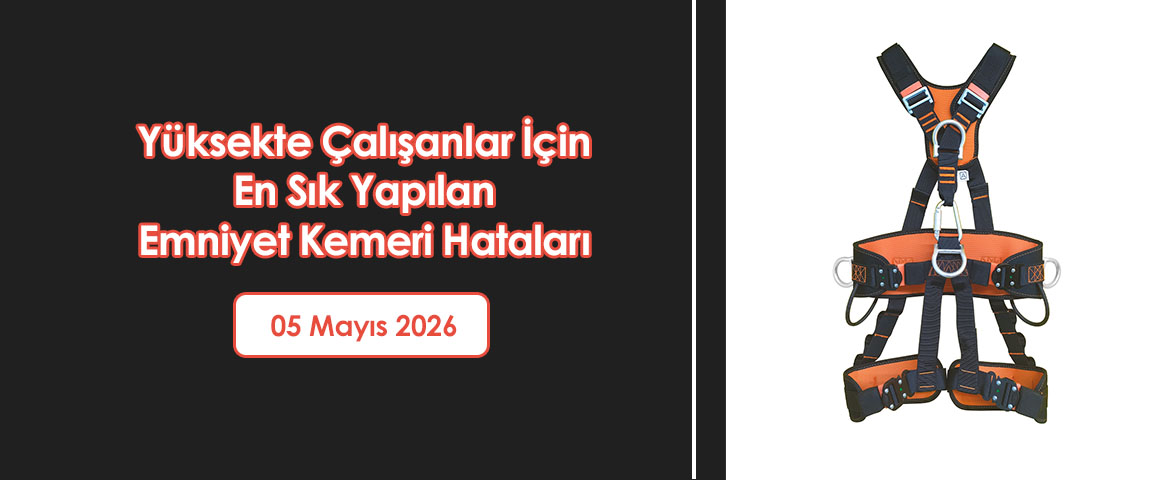
A construction-type safety harness is a full body fall arrest system designed to securely support the body and prevent serious injuries in the event of a fall while working at height. Thanks to its structure that wraps around the shoulders, waist, and legs, it evenly distributes the force generated during a fall across the body. It is commonly used in scaffolding work, roof installations, reinforced concrete structures, and high-rise construction projects.
Correct Usage Steps
Before using a construction-type safety harness, its fit to the body must be carefully checked. Harnesses that are too loose or too tight reduce comfort and compromise safety. The shoulder, waist, and leg straps should fit snugly around the body without restricting movement.
After putting on the harness, the attachment point (D-ring) must be used correctly. Typically, fall arrest connections are made via the D-ring located on the back of the harness. The safety harness should be used together with an appropriate lanyard or fall arrest system, and these systems must be connected to anchor points compliant with EN standards.
During work, care should be taken to ensure that the equipment connected to the safety harness does not become tangled and does not come into contact with sharp edges. Additionally, to minimize fall distance, it is recommended that the anchor point be positioned as high above the worker as possible.
Points to Consider
-
The safety harness should be visually inspected before each use.
-
Worn, torn, or deformed harnesses must never be used.
-
A safety harness alone is not sufficient; it must always be used together with appropriate connecting equipment.
-
Workers should receive regular training on the proper use of safety harnesses.
Conclusion
A construction-type safety harness is one of the most critical life-saving safety devices for working at height. However, incorrect use significantly reduces its protective effectiveness. For a safe working environment, proper equipment selection, regular inspections, and informed use are essential. It should never be forgotten that every safety measure taken in occupational health and safety helps prevent potential accidents.
Let our team recommend the best equipment for your needs and quote you quickly.