In This Article
The carabiner is a critical connection equipment used in many areas such as climbing, mountaineering, camping, and industrial work at heights. Although it may seem small, it is vital for safety. Therefore, choosing the right carabiner can make a big difference in both performance and safety.
1. Determine Your Purpose
When selecting a carabiner, first clarify where you will use it.
- Rock climbing
- Sport climbing
- Mountaineering
- Industrial work at heights
- Camping and daily securing tasks
For professional climbing and work at heights, certified carabiners should always be preferred. Simple models designed for daily use should not be used in safety systems.
2. Types of Locking Systems
Carabiners are divided into two main groups based on their gate mechanism:
Locking Carabiners
- Screw-lock
- Auto-lock
- Twist-lock
Used at main safety points and connections requiring high security.
Non-locking Carabiners
- Lighter
- Preferred in sport climbing where quick clipping is needed
They provide an advantage especially in situations requiring fast connections.
3. Carabiner Shapes
The shape of the carabiner affects load distribution and ease of use.
D-Shaped
Directs the load to the main axis and increases strength. One of the most common models.
HMS (Pear) Type
Ideal for belay devices and knot usage.
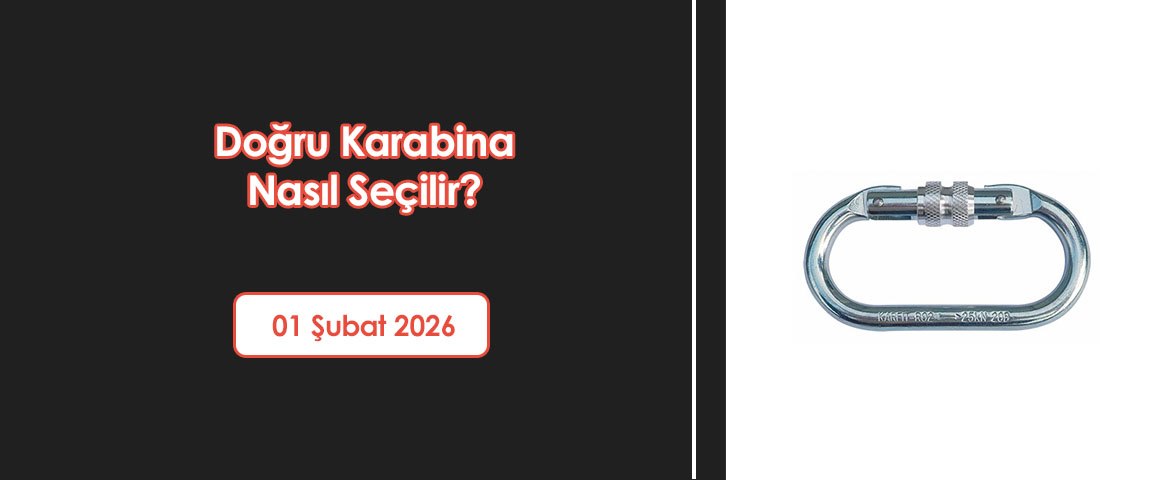
Oval
Preferred in pulley systems and equipment organization.
4. Material Selection
Aluminum Carabiner
Lightweight and ideal for sport climbing. Easy to carry.
Steel Carabiner
Heavier but resistant to wear. Often preferred in industrial use.
Steel models can have a longer lifespan in fixed systems and areas requiring frequent use.
5. Strength Ratings (kN)
Carabiners usually have three different strength ratings:
- Main axis strength
- Minor axis strength
- Gate open strength
For professional use, products meeting international standards should be chosen. UIAA and CE certifications are important safety indicators.
6. Weight and Ergonomics
Lightweight is important on long routes. Models with wide gate openings are more comfortable when using gloves. Automatic locking systems can be practical in cold weather conditions.
These brands manufacture according to international standards.
Which Carabiners to Avoid?
- Non-certified products
- Models without strength ratings
- Carabiners produced only for decorative or keychain purposes
When safety is at stake, low-quality and uncertain products should be avoided.
Conclusion
Choosing the right carabiner should be based on purpose, locking system, shape, material, and strength ratings. Although small, it is one of the most important links in the safety chain. Choosing correctly will both enhance performance and minimize potential risks.
Let our team recommend the best equipment for your needs and quote you quickly.