In This Article
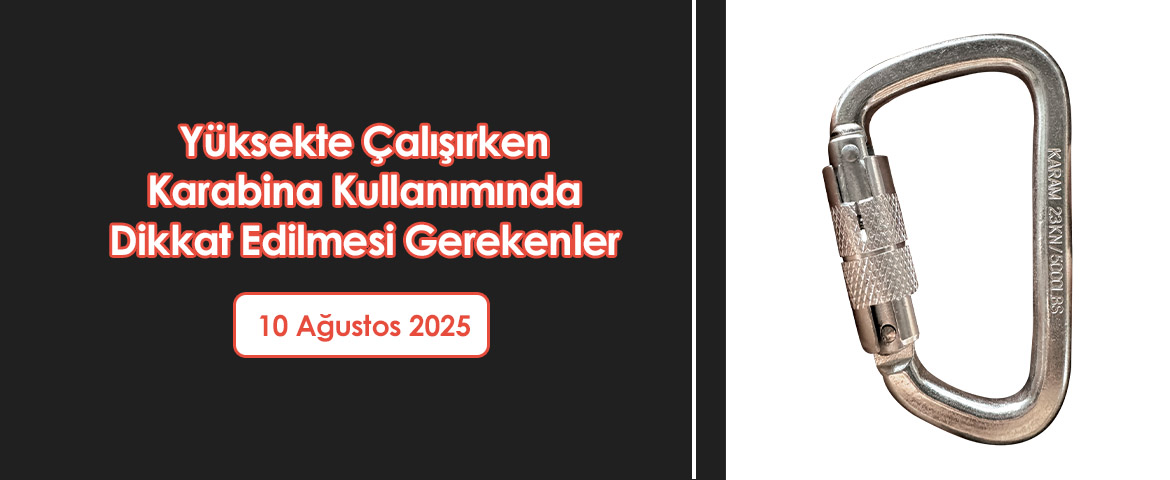
Working at height is common in many sectors such as construction, energy, telecommunications, and industrial maintenance. One of the most critical parts of the safety equipment used in these areas is the carabiner. A properly used carabiner can save lives, while incorrect selection or misuse can lead to serious workplace accidents.
1. Choosing the Right Carabiner
- Compliance with standards: Must be certified according to CE, EN, ANSI or similar international standards.
- Durability: A minimum load capacity of 22 kN should be preferred.
- Locking system: Screw-lock or automatic locking models enhance safety.
2. Checking the Locking Mechanism
The locking mechanism of the carabiner must always be checked before use. If the lock is left open or half-closed, the connection point may open under load.
3. Correct Positioning
- The carabiner should be positioned to carry the load along its long axis.
- Cross-loading (side loading) increases the risk of breakage.
4. Inspection for Damage and Wear
The surface of the carabiner should be regularly checked for cracks, rust, or deformation. Worn-out equipment must be replaced immediately.
5. Suitable Application
- Steel carabiners are suitable for heavy loads and industrial use.
- Aluminum carabiners can be preferred for lighter tasks but are not recommended for high-safety industrial work.
6. Periodic Maintenance and Training
- Carabiners should be periodically lubricated and kept clean.
- Workers must receive safety training on proper carabiner use.
Conclusion
Carabiners used in working at height are among the most important elements of safety. Through correct selection, regular inspection, and conscious use, workplace accidents can be prevented. Remember: A small piece of equipment can save a big life.
Let our team recommend the best equipment for your needs and quote you quickly.