
Bu Yazıda
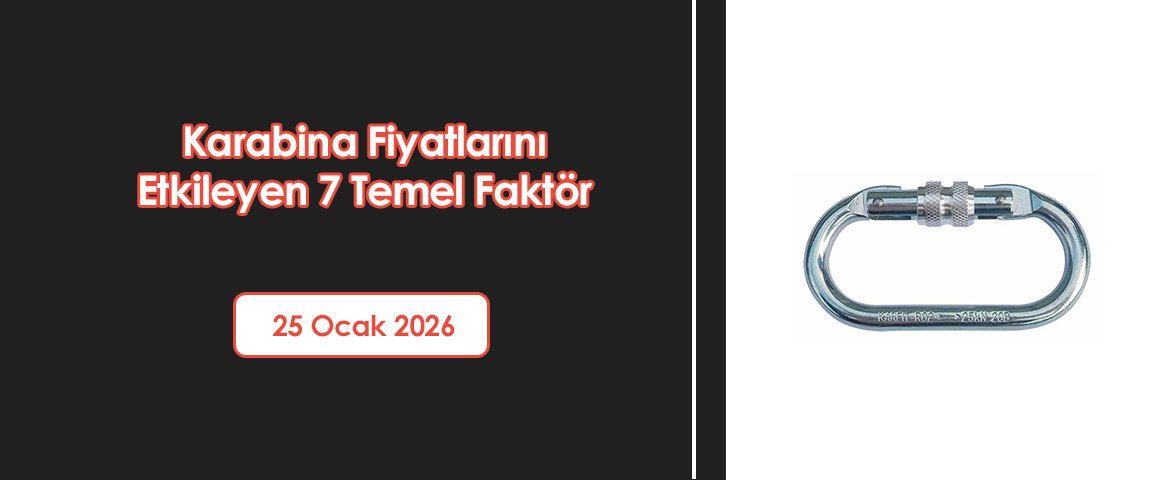
Karabinalar; yüksekte çalışma, dağcılık, endüstriyel güvenlik ve kurtarma operasyonları gibi birçok alanda kritik rol oynayan bağlantı ekipmanlarıdır. Piyasada farklı özelliklere ve fiyat aralıklarına sahip çok sayıda karabina bulunur. Peki, karabina fiyatlarını etkileyen faktörler nelerdir? Bir karabinanın neden daha pahalı ya da daha uygun fiyatlı olduğunu anlamak, doğru ürün seçimi açısından büyük önem taşır.
1. Kullanılan Malzeme Türü
Karabinalar genellikle alüminyum alaşım veya çelikten üretilir. Alüminyum karabinalar hafif olmalarıyla öne çıkarken, çelik karabinalar daha yüksek dayanım sunar. Kullanılan hammaddenin kalitesi ve mukavemeti, fiyatı doğrudan etkileyen en önemli unsurlardan biridir.
2. Taşıma Kapasitesi (kN Değeri)
Karabinanın taşıyabildiği maksimum yük, kilonewton (kN) cinsinden belirtilir. Daha yüksek taşıma kapasitesine sahip karabinalar, daha zorlu ve riskli işlerde kullanılabildiği için genellikle daha yüksek fiyatlıdır.
3. Kilit Mekanizması Türü
Vidalı, otomatik kilitli, üç hareketli (triple-lock) veya kilitsiz karabinalar arasında fiyat farkları bulunur. Özellikle otomatik ve çok aşamalı kilit sistemleri, ek güvenlik sağladığından maliyeti artırır.
4. Sertifikalar ve Standartlar
EN, CE veya UIAA gibi uluslararası standartlara uygunluk, karabinanın belirli testlerden geçtiğini gösterir. Sertifikalı ürünler, güvenilirlikleri nedeniyle genellikle daha yüksek fiyatlıdır ancak iş güvenliği açısından vazgeçilmezdir.
5. Kullanım Amacı
Endüstriyel kullanım için üretilen karabinalar ile sportif amaçlı karabinalar arasında ciddi fiyat farkları olabilir. Yüksekte çalışma ve düşüş durdurma sistemlerinde kullanılan karabinalar, daha sıkı güvenlik kriterlerine sahip olduğu için daha maliyetlidir.
6. Marka ve Üretici
Sektörde kendini kanıtlamış, Ar-Ge yatırımı yüksek ve kalite kontrol süreçleri güçlü markaların ürünleri genellikle daha pahalıdır. Ancak bu fiyat farkı, uzun ömür ve güvenlik avantajı olarak geri döner.
7. Ek Özellikler ve Tasarım
Ergonomik tasarım, özel kaplama, korozyon direnci veya hafifletilmiş yapı gibi ek özellikler, karabinanın maliyetini artırabilir. Özellikle zorlu çevre koşullarına uygun modeller, standart ürünlere göre daha yüksek fiyatlıdır.
Sonuç
Karabina fiyatları yalnızca tek bir unsura bağlı değildir; malzeme kalitesi, taşıma kapasitesi, kilit sistemi ve sertifikalar gibi birçok faktör bir arada değerlendirilmelidir. Doğru karabina seçimi, yalnızca bütçeyi değil, aynı zamanda güvenliği de doğrudan etkiler. Bu nedenle fiyat karşılaştırması yaparken, ürünün sunduğu güvenlik ve performans özelliklerini göz önünde bulundurmak her zaman en doğru yaklaşımdır.
Ekibimiz ihtiyacınıza en uygun ekipmanı önersin, hızlıca teklif verelim.